


World's No 1 Eco Friendly Cement Company
Building material for
a greener planet
Our low-carbon products are revolutionising the building
material industry in India and setting benchmarks in
sustainable construction around the world.
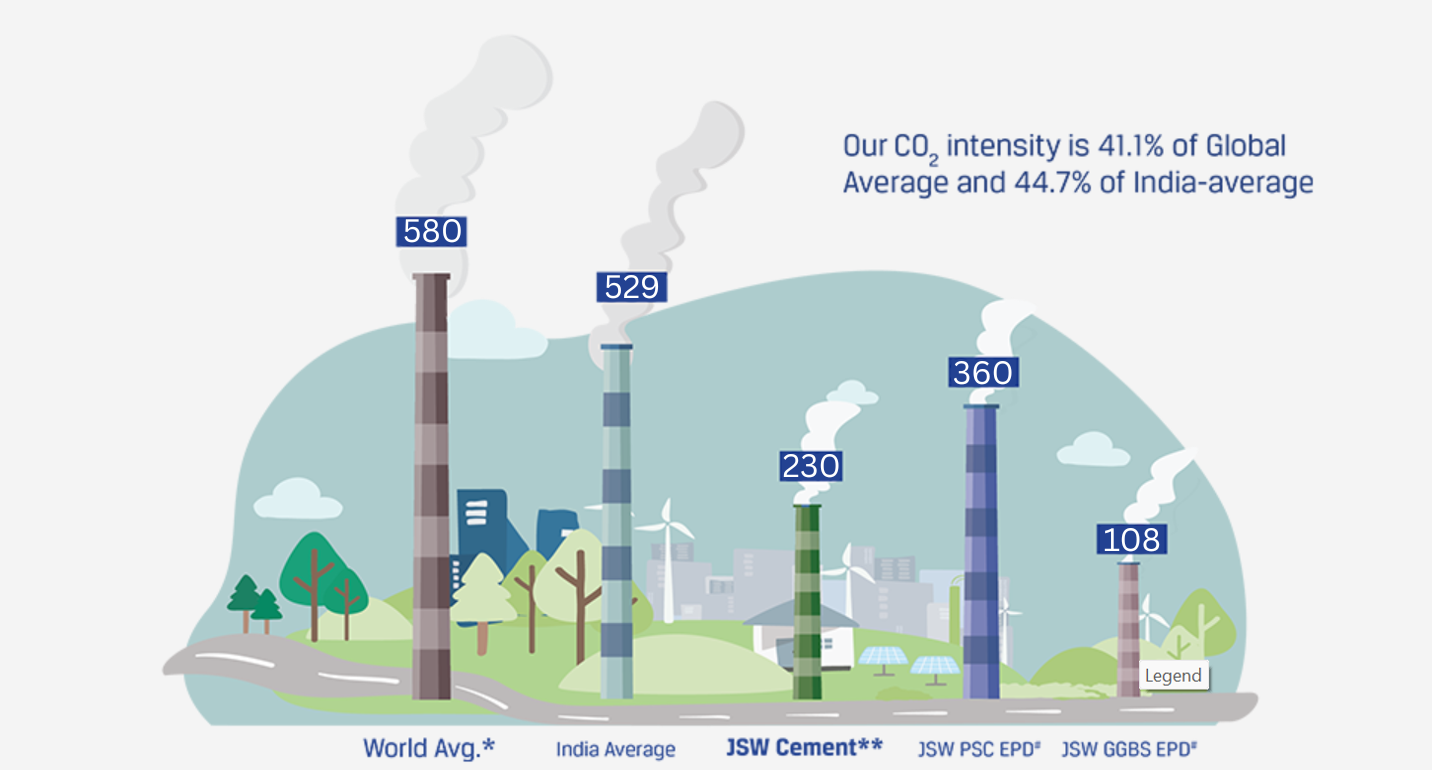
In FY25, we have emitted 52% less CO₂ as compared to India’s average and 54% less CO₂ as compared to the global average.
The global average CO₂ emission is 562 kg, and for India it is 535 kg, while at JSW Cement the average stands at 258 kg CO₂ per tonne of cementitious material.

Concreel HD
325 kgs of CO₂ is emitted on the production of 1 tonne of Concreel HD against an Indian average of 560 Kgs.

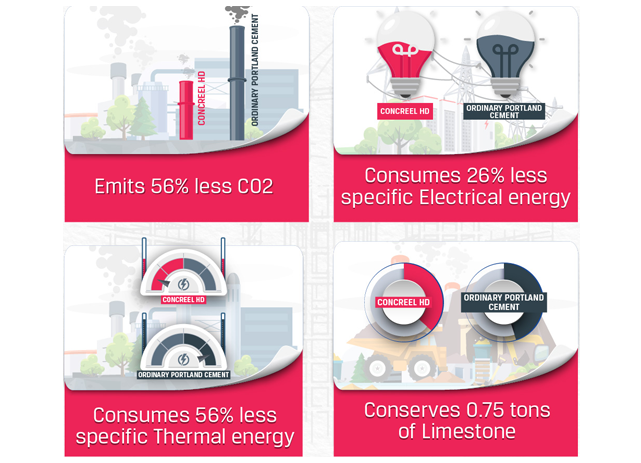
This comparison is 1 tonne of Concreel HD produced against 1 tonne of Ordinary Premium Cement
Premium Slag Cement
300 Kgs of CO₂ is emitted on the production of 1 tonne of JSW
PSC against an Indian average of 560 Kgs
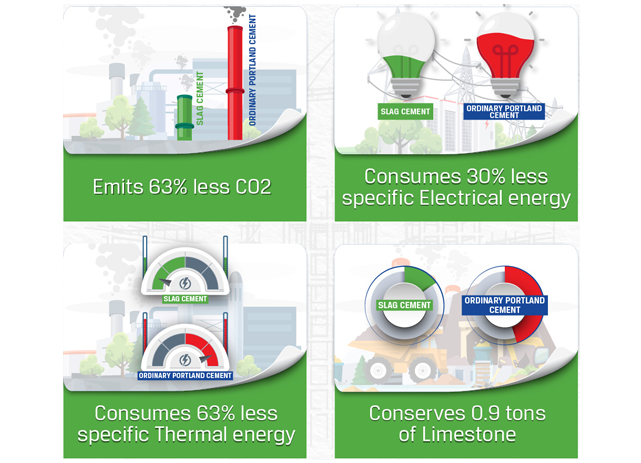
This comparison is 1 tonne of Slag Cement produced against 1 tonne of Ordinary Premium Cement
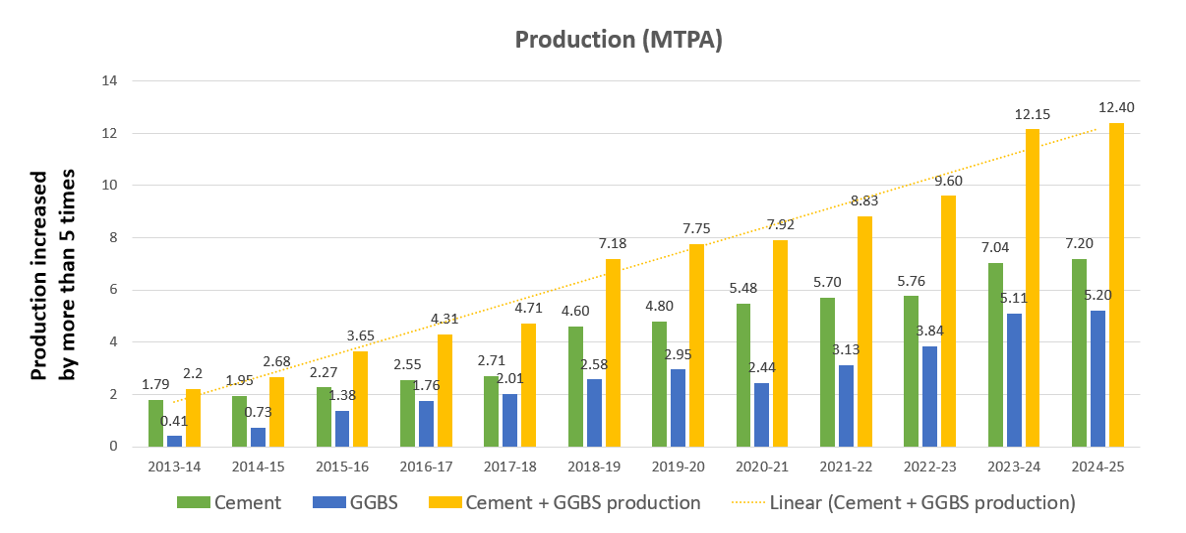
Production of cement and GGBS
From FY 2013-14 to FY 2023-24 (duration of eleven years), our production has increased from 2.2 to 12.1 MT of cement & GGBS.
Carbon footprint
In the same period, the carbon intensity has been reduced substantially from 522 kg CO₂ per tonne of cementitious material to 230 kg CO₂per tonne of cementitious material for Scope-1 emissions and from 596 kg CO₂ to 258 kg CO₂ per tonne of cementitious material for Scope 1+2 emissions. Cumulative annual reduction rate/decarbonisation rate of carbon intensity over twelve years is 6.6%.
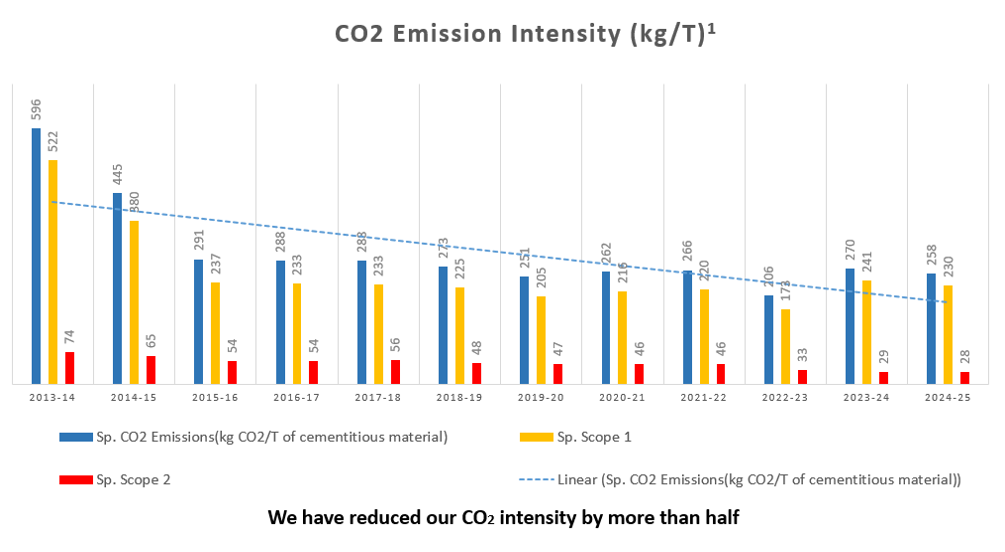

As per the GCCA GNR 2019 data, the average specific Net CO₂ emissions are 608 kg CO₂ per tonne of cementitious material for the world and 560 kg CO₂ per tonne of cementitious material for India. At JSW Cement, we are powered by sustainable initiatives and a green product mix, bringing our specific Net CO₂ emissions to 230 kg CO₂ per tonne of cementitious material during FY 2024–25, and our specific CO₂ emissions are approximately 40% of the world average and around 43% of the India average.